Welcome to the first Quarterly Culture Edit! For many years I’ve shared book reviews on a quarterly basis and this year I want to broaden my edit to include albums, movies, and exhibits. The art I share hasn’t necessarily been produced this last quarter, I’ve just been exposed to it over the last three months.
The work included in the edit will evolve as time goes on and I’ll be sure to highlight the best of the best for your consideration. After all, you know I’m a proponent of discernment in what you decide to spend your time consuming.
Jump to Books, Albums, Movies, Exhbits
Books
4 Star Books
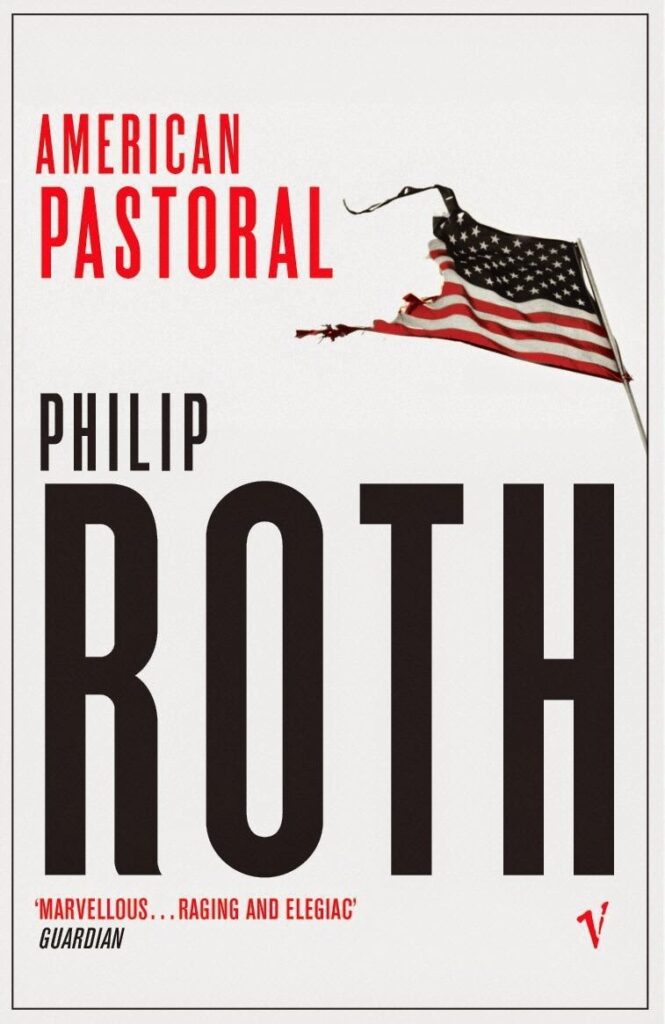
American Pastoral by Philip Roth
This novel is a deeply sad deconstruction of a man who believed in the value of decency and was proved wrong. The main character, the Swede, was a high school athletic superstar, the Jewish son of a Newark businessman, and a person who never had to ask “why” because his life was always perfect. Until his daughter Merry committed an act of terrorism and he was forced to confront the “why” every day and find no answers.
I found the maximalist detail, including of the Newark glove industry and factory life, a huge benefit to the novel. Roth’s research creates a physical sense of the world that makes its later decay feel more painful.
One of my key takeaways is that every child is their own person, regardless of a parent’s best efforts. Being a parent who is actively trying to raise a “good person” made the Swede’s failure feel personal and helped me conceptualize this idea that I’d heard but now appreciate more.
Another takeaway is that two people in exactly the same situation can have wildly different ways of handling it and subsequent outcomes. While the Swede tried desperately to pursue noble virtue and bring his daughter back, the Swede’s wife, Dawn, took the opposite approach. As it says in the novel, “the while he has been stoically enduring it she has made tremendous strides by finding it unendurable, by being devastated by it, destroyed by it, and then by denuding herself of it. She doesn’t resist the blows the way he does; she receives the blows, falls apart, and when she gets herself up again, decides to make herself over.”
This novel felt like a masterpiece of mourning. It challenges the idea that being good is enough to protect you from the randomness of history. This book is best for those who appreciate “Great American Novels,” complex father-daughter dynamics, and readers who are willing to sit with a story that is disturbing, but deeply rewarding.
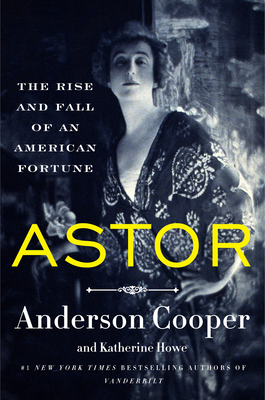
Astor: The Rise and Fall of an American Fortune by Anderson Cooper and Katherine Howe
(Read for library book club). This book about the Astor family serves as both a biography of New York City and a warning label for the American Dream. Anderson Cooper successfully deconstructs the myth of the Astor dynasty, revealing that “Greatness” often requires a level of narcissism and detachment that destroys actual happiness.
The book brilliantly contrasts John Jacob Astor’s ruthless active creation with his descendants’ passive management. The later generations rested on the laurels of real estate, proving that wealth rots when it becomes static. I think a lot about personal history and legacy, and this line resonated with me: “The two patriarchs (Astor and Vanderbilt) both remind us of what is possible and underscore everything we haven’t been able to achieve ourselves.”
The analysis of the Waldorf-Astoria hotel is a highlight. It proved that money, not lineage, was the true arbiter of American status, undercutting THE Mrs. Astor’s rigid society rules. Despite the detail, Mrs. Astor remains somewhat inscrutable. Her obsession with the “400” and rigid social rules felt disconnected from the reality of a changing America, and her internal drive remains a mystery.
This multi-generational saga starts with fur trapping and ends in elder abuse litigation. It is a stark look at how a family can win capitalism but lose at being a family. This is a great book for lovers of NYC history, The Gilded Age, and anyone fascinated by the psychology of wealth. Read it to understand the foundation of New York, but don’t envy the builders.
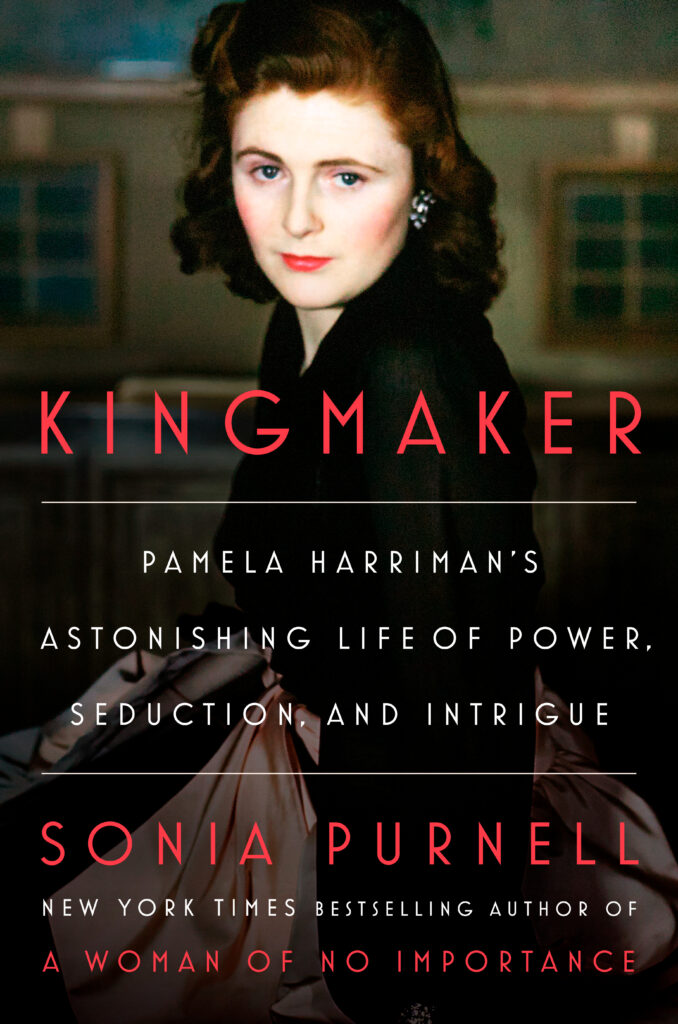
Kingmaker by Sonia Purnell
A compelling biography does not require a lovable subject. Sonia Purnell successfully argues that Pamela Harriman was a geopolitical force, but the reader is left wrestling with the moral cost of that power. It is a portrait of a woman who mastered the political game at the cost of goodness.
The early chapters are persuasive in showing how living with the Churchills during the Blitz wasn’t just proximity – it was training. This gave her the foundation and credibility to understand how the world truly works. And to understand that those who wield power are just normal people in abnormal circumstances.
The depiction of her time in Paris is a highlight. Her success came from a unique blend of logic and high emotional intelligence. I appreciate people who understand the emotional drivers of decision-makers.
A frustrating disconnect did happen between her early hyper-awareness of her family finances and need to survive compared to her late-life passivity. It was disappointing to see a woman so capable of acquiring funds eventually let others control her destiny. This showed me that while she could be so influential in the lives of others, she never viewed herself as an individual completely worth pouring into.
When it came to finale, she pulled off a magnificent feat in turning around the Democratic party and getting Bill Clinton elected. In my opinion, she disregarded what was good for her adopted country in favor of what could help her win and give her more power.
This was a fascinating look at the mechanics of 20th-century influence and the invisible pathways to power for women, even if the “Kingmaker’s” final choice leaves a bitter taste. Readers interested in diplomatic history, the Churchill era, and complex (even unlikable) female protagonists will enjoy this book. Read it to understand how politics play out, but don’t expect to find a moral role model!
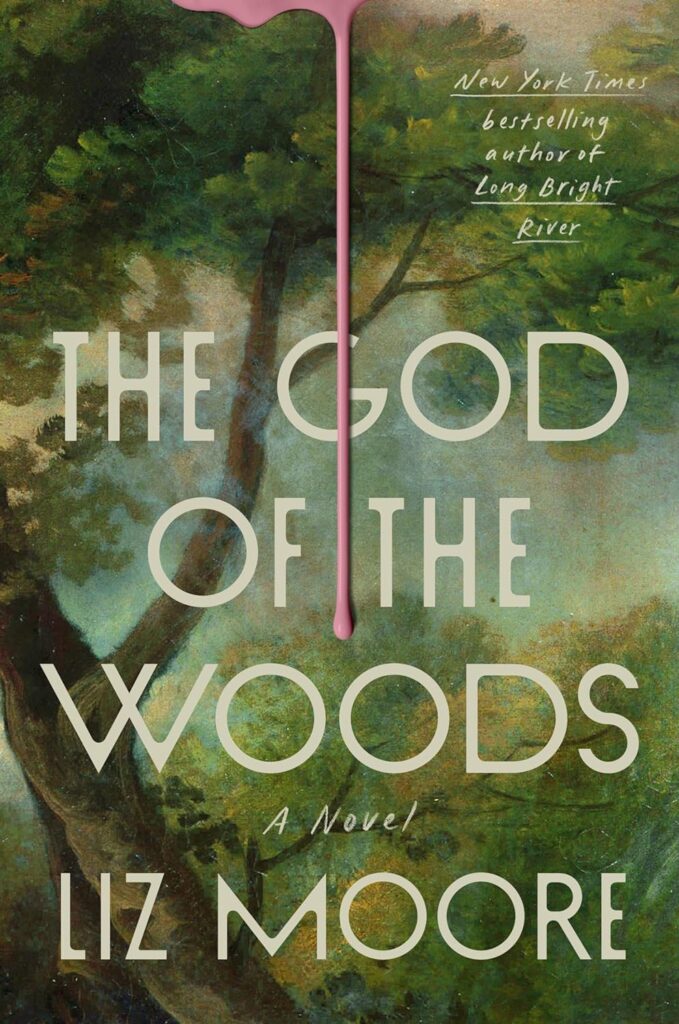
The God of the Woods by Liz Moore
This novel is an atmospheric, heavy character study that is more social tragedy than thriller (which is good, because I tend not to be a thriller fan). The core of this book is about the myth of self-reliance. While the mystery provides the framework, the book’s true power lies in its depiction of how rigid social standards and trauma create a shell out of its characters.
I found Alice’s portrayal to be haunting and deeply empathetic, and it gave me perspective on a woman living through unimaginable torture. Her paralysis and drug-induced shell feel devastatingly real.
I also loved the depiction of interdependency – how the rich and poor in the Adirondacks are tethered together in a survival pact where the rich provide employment and the poor provide knowledge. The setting of the woods further emphasized this message as it is a place of dependency rather than solitary strength and the central home being called “Self-Reliance” was highly ironic.
While I loved a lot of this, there were a few elements that didn’t land for me. Judy’s skills as an investigator felt less like professional competence and more like a narrative convenience. She kept having this buzzing, tingling feeling when she got useful information, but she didn’t do much to uncover it, it just sort of happened.
I was also shocked by the parents’ lack of reaction to Barbara’s disappearance and it made them difficult to empathize with until the final revelations.
This is a lush, dark read that stays with you because of its emotional weight rather and its plot twists. It’s a must-read for those who love character-driven literary fiction and camp aesthetics.
3 Star Books
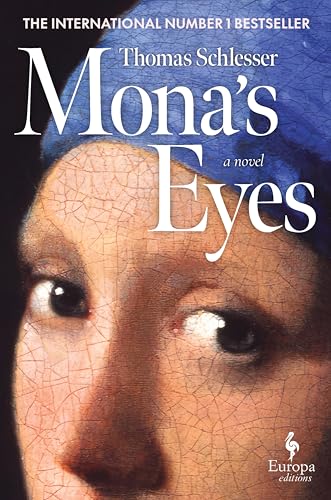
Mona’s Eyes by Thomas Schlesser
This is a beautiful art history lecture masquerading as a mediocre novel. While the philosophical insights into art and happiness are profound, the narrative framework is a fragile scaffold that fails to support its own weight.
In this novel we follow Mona, a young girl in Paris who is feared to be losing her eyesight, and her grandfather who takes her to see a new piece of art each week to create a bank of beauty in her mind. This has everything I love – art! children’s perspectives! Paris! But it also had many side plots (how are we kind of sort of discussing euthanasia?) and was unable to get over the author’s weakness of structuring a story.
I really enjoyed the exploration of happiness not as a selfish goal, but as a “political virtue” and a duty to others, as well as the liberating idea that “it is the viewer who makes the paintings.” There were also some moments, like an observation on the “insidious pain” of anticipating a problem versus actually experiencing it, that made me think and reflect on my own life.
However, the plot feels like an excuse for an art historian to share his passion rather than a story written by a novelist. The grandfather functions more as a mouthpiece for the author’s lectures than a compelling, three-dimensional grandfather. And there were cluttered narrative choices (the grandmother, euthanasia, and school scenes) that lacked payoff.
The prose leans toward the didactic. It would have functioned much better as a series of connected short stories focusing on individual artworks rather than a forced overarching narrative.
While I loved the art and the ideas, I did not like the book as a cohesive unit. This would appeal to art history buffs who don’t mind a weak plot, or readers looking for beautiful quotes to add to their commonplace books. Read it for the curated art tour, but don’t expect a novel that moves you emotionally through its story.
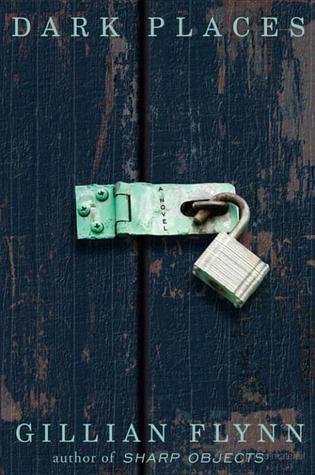
Dark Places by Gillian Flynn
(Read for library book club). This is a visceral, grim, and deeply uncomfortable read. Gillian Flynn expertly explores stunted characters and while the mystery is gripping, the real horror lies in the voyeurism of true crime culture and the unforgivable silence of those who watch.
Libby Day is a refreshing subversion of the resilient victim. Her difficulty functioning and stunted nature feels authentically broken (I would be even worse off than her in those circumstances). I found the parallels between the Salem witch trials and the accusations of Ben Day disturbing. This was the first time I truly understood the kind of impact the “Satanic Panic” of the 80s had. In the book this destroyed Patty Day long before the massacre did.
It was really hard to read about The Kill Club. It felt ghoulish and transactional, highlighting the uncomfortable line between history and tragedy-as-entertainment. It reinforced the discomfort I’ve always had with true crime and understanding those who enjoy it. I feel like a gothic novel or a ghost story is the way to go rather that be voyeurs of a tragedy that isn’t ours to consume.
My take is that Ben Day is not a victim; he is a villain. Doubling down on his loyalty to Diondra as a sober adult proves he is a participant in his family’s erasure. That really made this a dark, heavy read that succeeds in its character study but leaves a sick feeling regarding its subject matter.
This is a good read for those who appreciate unlikable protagonists and gritty psychological realism, definitely not for those who want a strong survivor trope. You should pick it up for the mystery, but be prepared to question your own role as a viewer of the macabre.
Albums
I’ve found myself nearly exclusively listening to albums over the past few months. When I’m working, I’ll put on a YouTube background video, but when it’s time to actively listening it’s albums. Not playlists, not jumping from song to song – one album, front to back. I’ve been loving it and my husband, a musician, said “It’s the way artists create their music to be heard.” It feels like listening to CDs on my boom box as a child and I’m loving it.
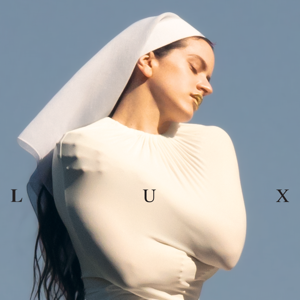
Lux by Rosalía
This album is a wide ranging, experimental blend of many music types, from pop to classical. It also features 14 different languages and some of the most beautiful vocals I’ve heard in a long time.
Interestingly, I haven’t found anyone in my personal life who is a fan, but there are many on the internet who share my view (just check out the comments on her BRIT Awards performance). I particularly like the songs “Reliquia” and “Divinize.”
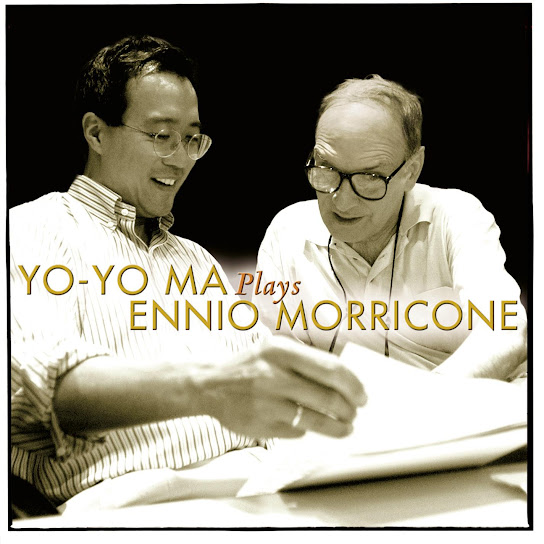
Yo-Yo Ma Plays Ennio Morricone
This is the perfect album to listen to when reading. I was first exposed to Yo-Yo Ma when I was a child and had the incredible opportunity to see him perform at Carnegie Hall. I fell in love with the cello then and I’ve held on to a dream of being in an orchestra since then, despite not having any musical talent.
The Art of Loving by Olivia Dean
My friend Austen described this as “The background music for your life,” and she is so right. I hadn’t listened to Olivia before and, since I’m not on social media, I never even heard snippets of her songs. From the very first full song, “Nice to Each Other,” I was hooked.
The album is breezy, while still exploring deep feelings, and it’s been the background music to many dinners and mornings getting ready in my house.
Movies
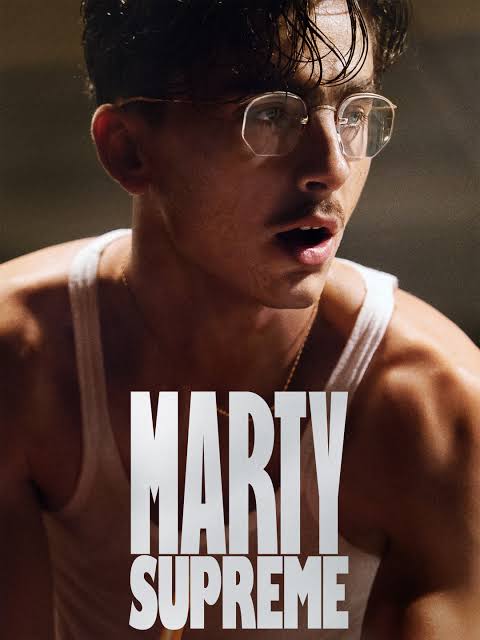
Marty Supreme
I absolutely loved this movie. I was smiling the entire time and found the pacing and acting thrilling. The movie is directed by Josh Safdie, who also directed Uncut Gems with his brother. I’m a huge fan of Uncut Gems as well, so it makes sense that I would love this just as much.
This movie doesn’t give you a second to breathe and I would watch this again and again, but I don’t think I’d ever get tired.
Watch Marty Supreme if you want a total escape, a laugh, and to think about the cost of ambition.
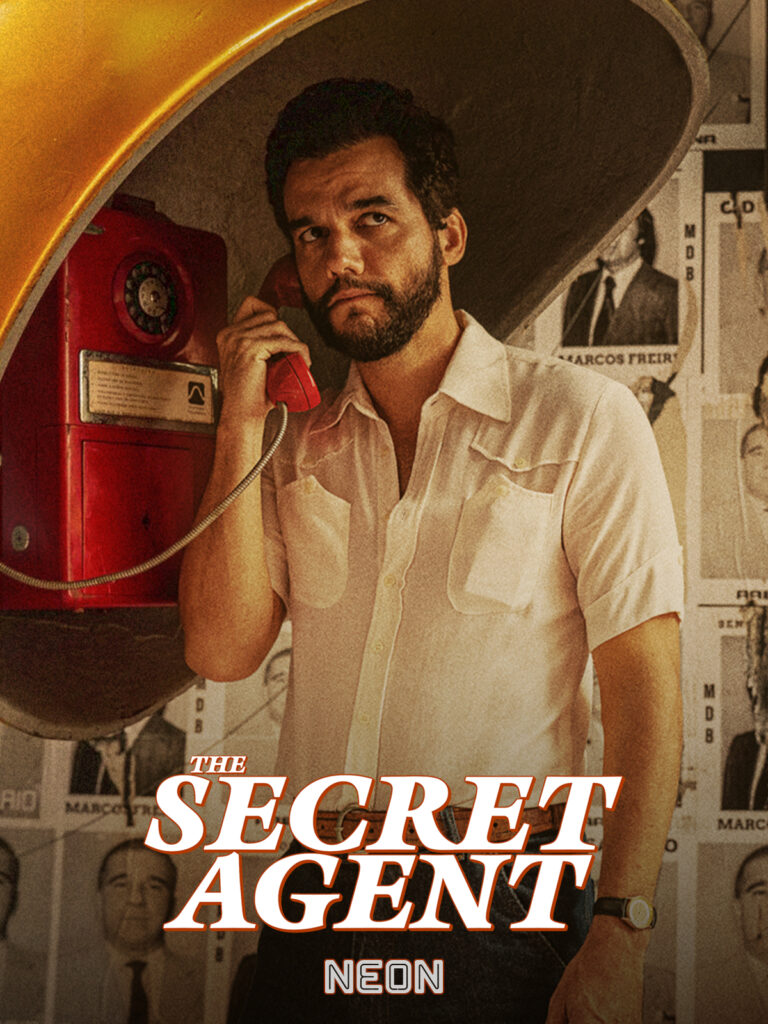
The Secret Agent
This is on the opposite end of the spectrum from the pacing of Marty Supreme. The Secret Agent is a Brazilian historical political thriller film. There are many scenes where details slowly emerge and a climax that turns the pacing on its head.
The film was beautiful and so atmospheric. I felt like I was truly in 1970s Brazil, despite not being alive in the 1970s and never having been to Brazil. Every detail was immaculate and the 2 hours and 40 minutes were completely immersive.
Exhibits
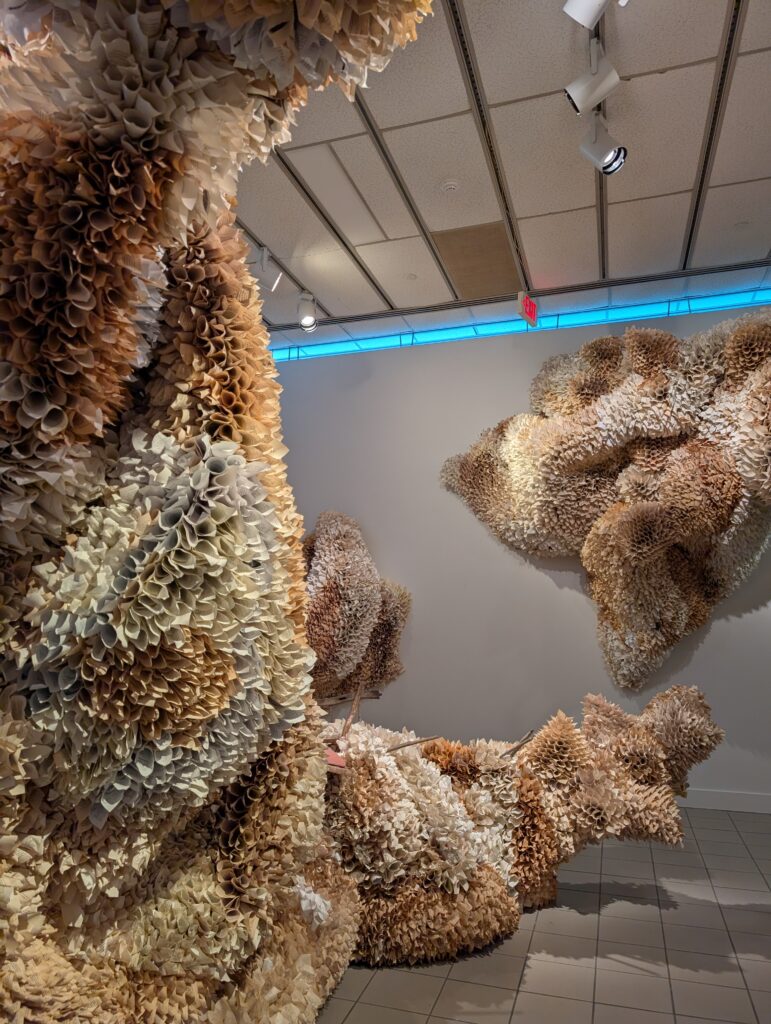
Contemporary Volumes at the Morris Museum
My son and I went to the Morris Museum when he had a day off from school and got to explore Contemporary Volumes, an exhibit exploring books. How perfect!
We were particularly enthralled with this installation called Permutation 3 by Samuelle Green. It was a room filled with pages of books in sculptural forms.
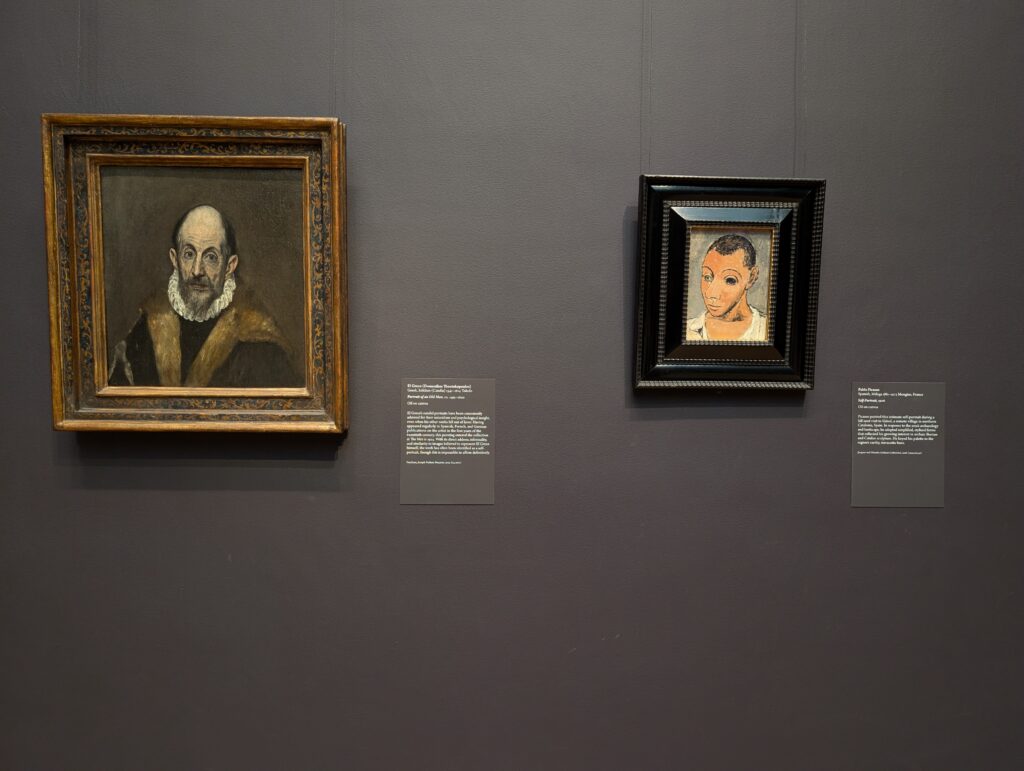
El Greco and European Modernism at The Met
There was a gallery buried in the back of the European section of The Met that contained a comparison of works by El Greco and the pieces he inspired by modernist artists as the turn of the twentieth century (think Picasso and Cézanne).
Seeing the interpretation of similar subjects and the very clear, side by side, view of inspiration made me think about how no idea is truly original and how beautiful that is.
Writing all of this out makes me realize just how much time I’ve been able to dedicate to art in the past few months and I feel grateful to spend my days this way!
What have you been loving recently?


[…] out Quarter One and Quarter Two of […]