It’s time for my second big reading update of the year! I hope that you’ll notice that many of these reviews are more thorough and thoughtful then my reviews in the past. I’ve been focused on reading more intentionally and deeply and treating my reviews almost like mini essays. This helps me get more enjoyment out of reading and also helps me remember more of what I read and what I thought about it. I’ll publish a post soon going into detail on how I’ve evolved my reading and reviewing process that will hopefully give you inspiration for your own reading.
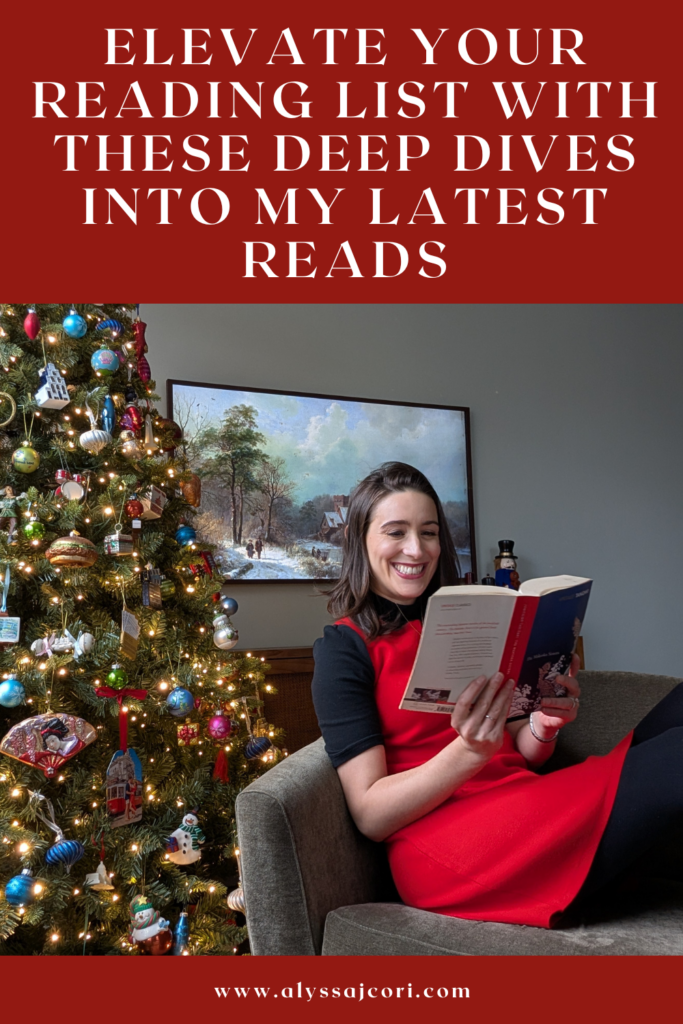
In the meantime, here is a selection of the books I’ve read in the second half of the year that will give you ideas of what to add to your reading list.
5 Star Books
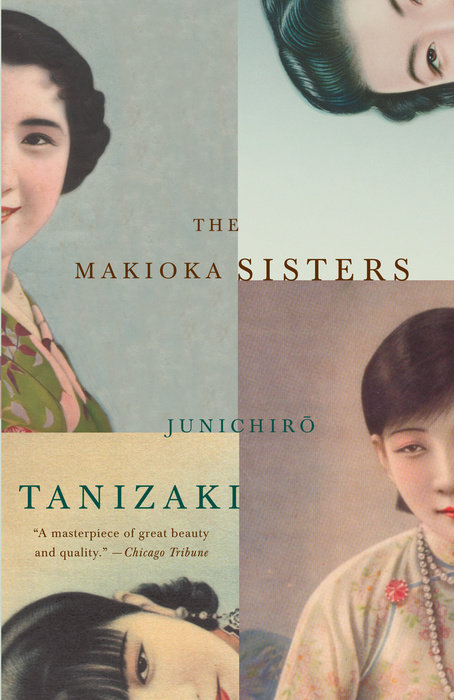
The Makioka Sisters by Jun’ichirō Tanizaki
I loved the experience of reading this novel! It was challenging and the prose was rich and it made me think. This book chronicles the once-great Makioka family’s gentle decline. It’s focused on the challenge of marrying off the third sister, Yukiko, while dealing with the modern aspirations of the youngest, Taeko.
The modern realism style heightens the suspense and anxiety of the reading experience. There is tension between tradition and modernization (demonstrated by kimono versus Western clothing and Yukiko’s decorum versus Taeko’s independence), East versus West (demonstrated by interactions with German/Russian families), and rich versus poor/high versus low Families (demonstrated by the Makioka family dealing with lower-class matchmakers like Mrs. Itani as their family declines).
The novel also powerfully illustrates how inaction has negative consequences. It highlights how families (whether poor or great) can be trapped in paralysis, like when Taeko’s love interest suffers fatal gangrene because his family delays the decision to amputate his infected leg and not even intercession from the great Makioka family could save him. Similarly, the Makioka family delays decisions Taeko’s care when she is sick because she is staying at Okubata’s house, and they consider it a “disgrace” to call attention to it.
I especially loved all of the scenes that remain in my mind, like a man singing on the train, Taeko’s harrowing experience in the flood, the Tokyo house’s thin walls shaking in the wind storm and contrasting eating habits between Japanese and Western families.
I highly recommend this for fans of literary fiction, character studies, and stories about cultural transition and class decline.
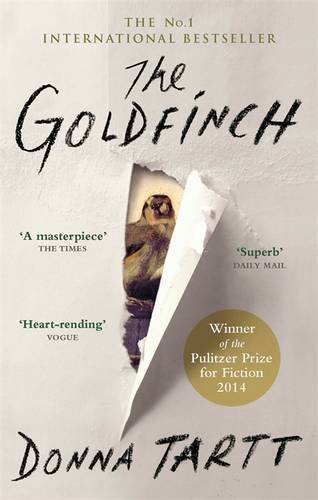
The Goldfinch by Donna Tartt
This is the second time I’ve read this novel and I have so many more thoughts. This remains a favorite and exactly the type of book I love – long, dense, atmospheric – about the things I love – New York, art, antiques, children’s perspectives. My reading this time around was impacted by the fact that I am a mother myself and was imagining my child as Theo and what the immense loss of a parent does to a person. The novel revolves around trauma and a single act in the heat of the moment to explore the entire life of one, haunted man.
The deliberate, episodic structure gives the novel an immersive quality and makes the moments of high drama all the more impactful as you feel you are really in the world with the characters. I loved the use of the character Boris to provide shock and interest, so the book never feels stagnant.
The exploration of moral awareness and its development in Theo shows the need to have guidance throughout your life. This was more of an opportunity to observe the impact of guilt than to judge decisions. The theft that the novel centers on was initially one of trauma, not conscious theft, and Theo’s relationship isn’t with the art as a historical object, but with the idea of the object as a secret, a burden, and a precious, fragile link to the past.
Highly recommended for readers who LOVE long books and are looking for a deep, character-driven story that prioritizes psychological complexity and philosophical inquiry over quick-paced plot.
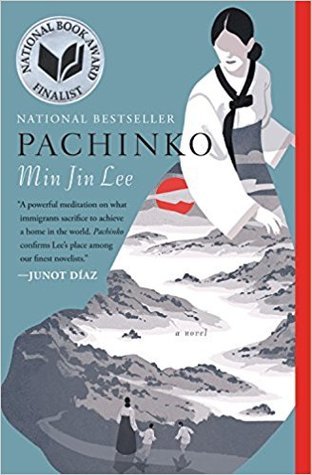
Pachinko by Min Jin Lee
This novel is powerful, sprawling multi-generational story that I appreciated even more on a second read, and found a whole new appreciation for the mother/child dynamic. The writing manages to be epic in scope yet incredibly intimate in its portrayal of daily struggles and emotional lives. Pachinko continues to be a real standout for me!
The novel is built on numerous relationships that capture my imagination and make me think. I especially loved Kyunghee, who is incredibly upstanding and supportive, and the relationship of Sunja and Kyunghee is a particular highlight. The fact that Kyunghee embraces Sunja despite Sunja having a child and eventually the ability to work outside of the home, while she does not, impressed me. I also felt that since Kyunghee came from a wealthy family, her shock to the life she leads during the war years could have been much greater, but she remains a strong figure.
I believe this relationship is meant to be central, especially since the final sentence of the book, from Sunja’s perspective is, “Kyunghee would be waiting for her at home.”
I’ve also watched the Apple TV series since last reading the book and it absolutely does not do it justice.
4 Star Books
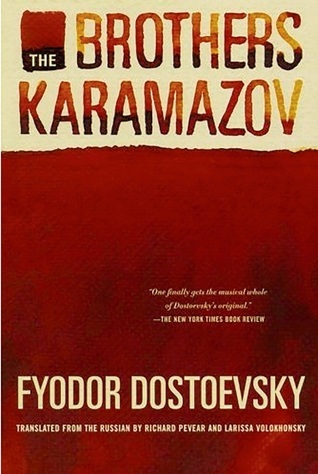
The Brothers Karamazov by Fyodor Dostoevsky
This book took me over a month to read and I loved the experience. “The Brothers Karamazov” is about the relationship of three brothers and their father, but it’s also a commentary on Russia as it’s “modernizing,” the influence of religion and expectations of clergy, the impact of transgressions against parents on their children, a romance, and a criminal investigation and trial all in one. It covers a lot and makes sense that it would take quite some time to get through!
The writing felt accessible despite requiring concentration to follow the arguments and messages the author was conveying. I’ll likely remember the experience of reading this book more than the plot and characters. I highly recommend this massive novel if you want an enjoyable challenge.
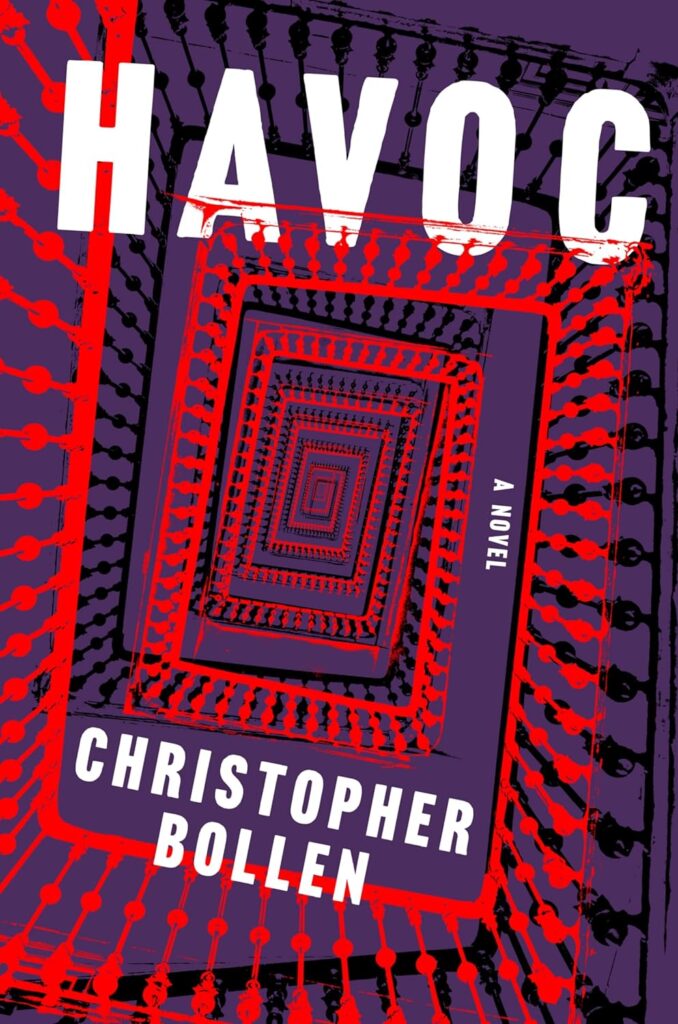
Havoc by Christopher Bollen
This is a strangely thrilling and unique character study on delusion and control, which is best enjoyed by suspending disbelief and judgment.
Havoc follows an elderly widow, Maggie, staying at a luxury hotel in Egypt, and examines her compulsion to fix the lives of others and what happens when she is confronted by an eight year old boy. The expert deployment of the unreliable narrator forces a full retrospective re-evaluation of all prior events, especially regarding her repressed grief, and makes this a novel you don’t want to put down.
Maggie’s relentless effort to up the ante at every turn instead of seeking genuine help for her eight year old nemesis illustrates a cycle of moral failure tied to her territorial defense of the hotel. Many parts are delightfully unbelievable to read, but as you venture beyond the hotel, you see that Maggie is powerless in the wider world and the hotel is a symbolic boundary of her sanity.
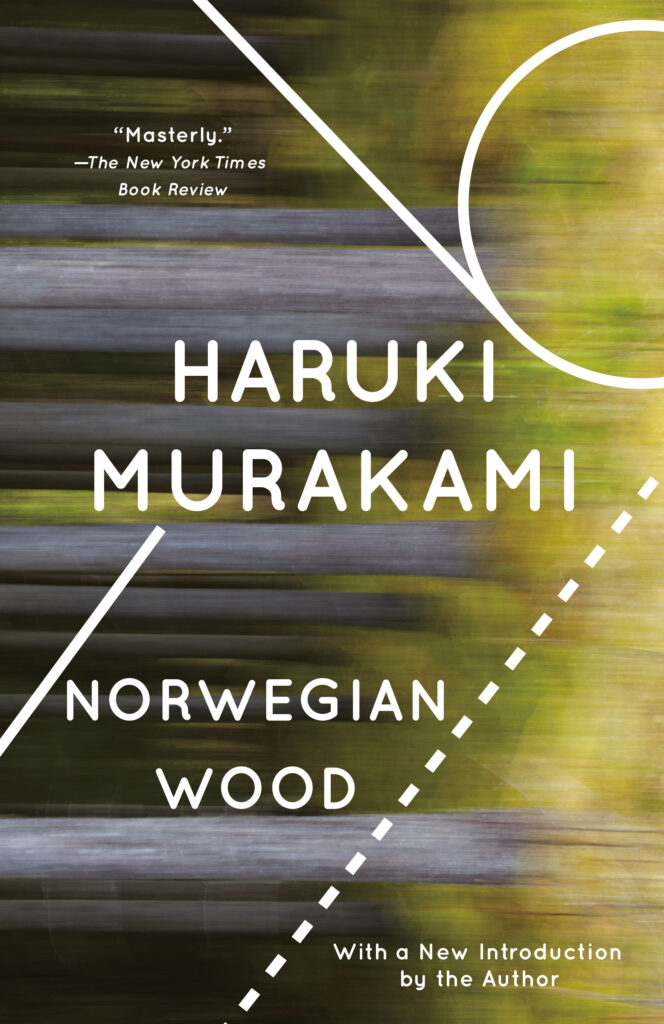
Norwegian Wood by Haruki Murakami
This was an emotionally fraught book and very unlike the other Murakami work I’ve read. It was compelling and thought-provoking, but also had many graphic sex scenes that were distracting and took away from the experience. While this was fitting for a 20 year old protagonist to discuss, I would have preferred less of it.
The novel takes place over the course of a year in 1960s Japan. Toru, the main character, lost his best friend to suicide and he develops a deep relationship with his best friend’s girlfriend, Naoko, who is consumed by grief. I found him to be a selfish character, especially in his relationship with Midori, though he is sympathetic and you get the sense that he is trying his best, but his best is very lacking. His encounters with Naoko, Nagasawa, and the vivacious Midori serve to alter his emotional state and make him realize what he wants in life.
The main theme I took away was withdrawal and healing. Naoko removes herself from society and goes to a sanatorium where she only interacts with a few people. Toru does not remove himself physically, but majorly limits his social interactions and passively avoids seeking support to heal. Ultimately Midori and Nagasawa draw Toru out and invite him into their more vivid (though also problem-filled) lives.
My favorite line from the book is “If you only read the books that everyone else is reading, you can only think what everyone else is thinking.”
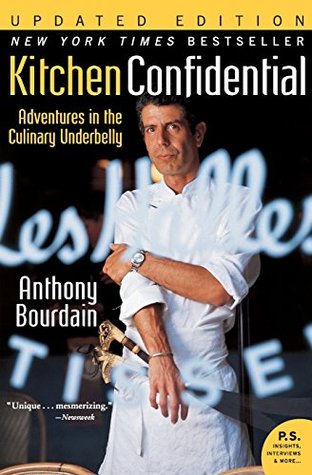
Kitchen Confidential: Adventures in the Culinary Underbelly by Anthony Bourdain
This is a compelling, impeccably written book about the culinary world, focused on Manhattan. The author’s style is fast paced, self aware, and I thoroughly enjoyed reading this.
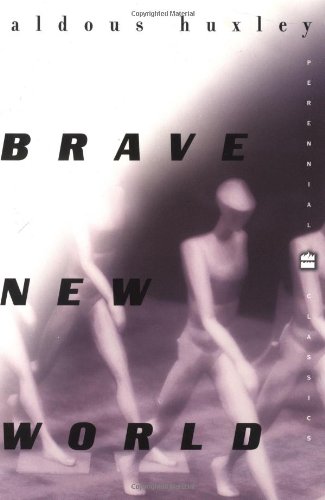
Brave New World by Aldous Huxley
This is an essential read for anyone who wants to think about purpose, choice, and what makes the human experience worth having.
My favorite part of reading this novel was considering the motivations behind demanding change. I always think about the reason people say something and the real reason that makes them believe it, and the brilliant distinction between intellectual rebellion (Bernard’s ego-driven dissatisfaction) and aesthetic and existential dissatisfaction (Helmholtz’s genuine yearning for meaning) was the most compelling part of the novel for me.
The genius and terror of manufactured identity and the World State’s logic that stability requires achieving alignment by having the same genes and conditioning and experiences made me think about whether stability is the right goal for humanity at all. This is illustrated by the Savage who isn’t accepted in either world, and his attempt to achieve a completely ‘pure’ world leads to his tragic demise.
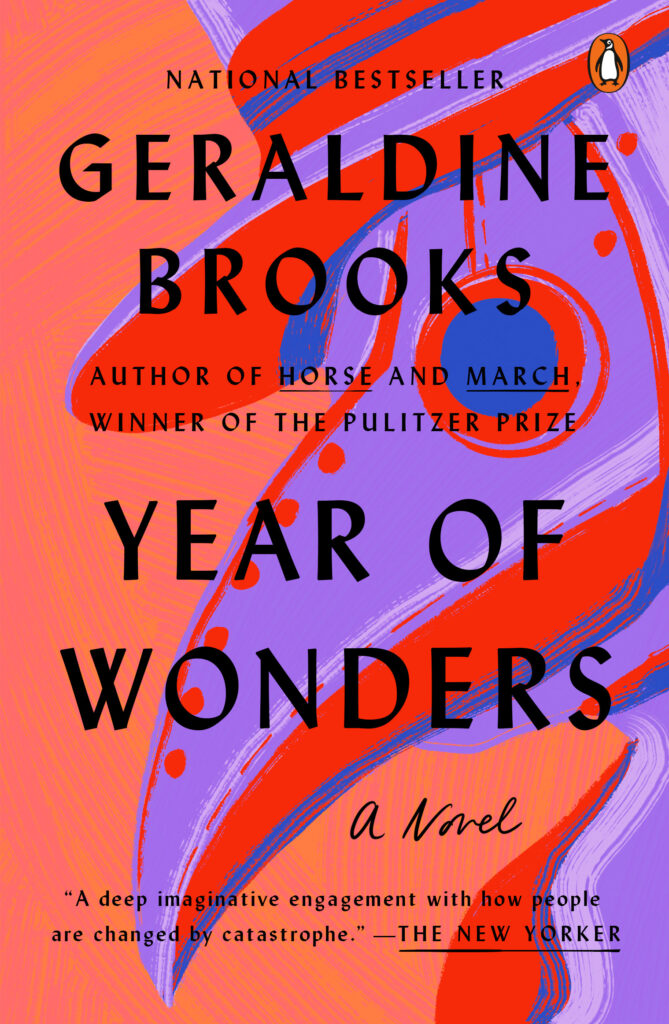
Year of Wonders by Geraldine Brooks
I’m fascinated by stories of outbreaks and pandemics. This fascination predates my personal experience during the Covid pandemic and likely stems from the fear I feel about the unknown and uncontrollable.
“Year of Wonders” chronicles the experience of a woman who loses her family, friends, and neighbors during a plague outbreak in England. It explores themes of religion and the providence of God, jealousy and forgiveness, and made me think about how I’ve never truly experienced anything as horrifying or challenging (thankfully!).
I highly recommend this book if you enjoy seeing the extremes of the best and worst of people drawn out by their circumstances and appreciate complex feelings and relationships.
3 Star Books
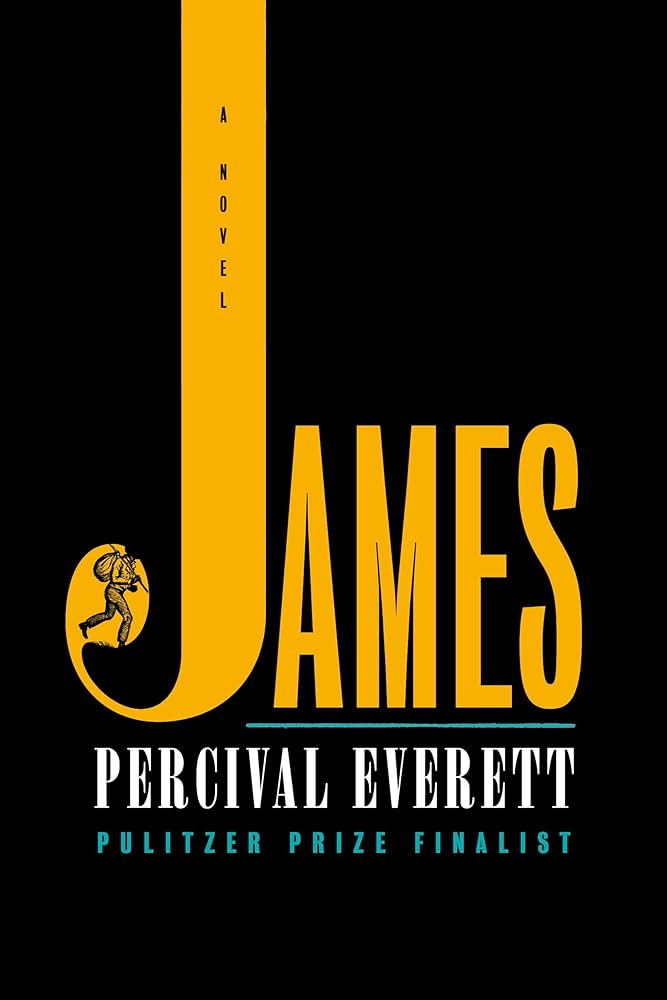
James by Percival Everett
James is a satirical reimagining of Huckleberry Finn (one of my favorite novels). While its depiction of the brutality of slavery is unflinching, the novel’s major narrative choices ultimately felt reductive, prioritizing literary commentary over authentic character development.
One of the key devices in the book was James’s code-switching (using “slave talk” in front of white people and “proper English” with other slaves). This showed in very clear and stark contrast how people need to hide their true selves to survive. However, to me this was an insult to the original novel, arguing Jim in Huck Finn wasn’t a fully complete/fully formed character because of the language he used. The mechanism also risks minimizing the value and intelligence of any and all people who don’t speak “proper English.”
I also felt that the revelation that James is Huck’s father was a minimizing choice. Instead of developing a genuine bond, this twist forced the relationship and reinforced the prejudiced idea that black and white cannot be friends unless they are bound by blood. While the novel’s satirical intent is clear, the deliberate lack of emotional development in key relationships prevents the reader from fully investing in James’s ultimate quest for freedom.
I enjoyed the idea of confronting American literary history, but its high-concept approach comes at the expense of emotional depth. I recommend this novel to readers interested in historical satire and critical retellings of classic texts, but it’s not for those who want a character-driven story built on genuine connection, as they may find its major plot points disappointing and reductive.
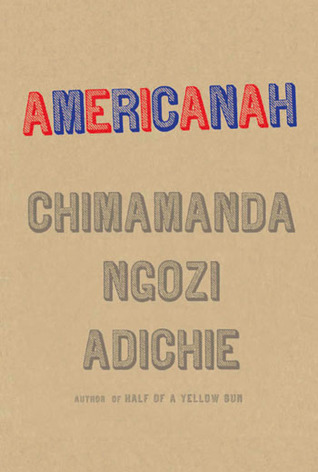
Americanah by Chimamanda Ngozi Adichie
Americanah brought a phenomenon to my attention that I had never fully considered: the specific way non-American Blacks experience “Blackness” in America. The story follows Ifemelu, a young Nigerian woman who migrates to the United States before eventually returning to her homeland. While the book was an immense learning experience for me, I found the central romance undermined by the protagonists’ intellectual arrogance and a disappointing lack of moral growth.
One of the most effective narrative devices in the novel is the inclusion of excerpts from Ifemelu’s blog, Understanding America for the Non-American Black. As a blogger myself, I felt a unique connection to her relationship with her writing, which allowed me to view her voice with a more critical eye.
Since my own life experience is so different from Ifemelu’s, these posts were essential for my reading comprehension; they provided an explicit roadmap of her perspective rather than leaving me to guess at her internal state. However, I also realized the blog functioned as a barrier and as a way to portray herself in her desired light. It kept Ifemelu distanced from those who had fully assimilated. She moved through life with an evaluation lens, prioritizing observation over being present in her actual experience. To me, this felt like a form of intellectual superiority; she used her platform to articulate what she believed others couldn’t see, effectively keeping herself “above” the society she was critiquing.
Where I struggled most with this book was the astounding lack of shame or self-reflection regarding the characters’ interpersonal choices.
In America, Ifemelu’s relationships felt like exercises in power or performance. With Curt, the power dynamic was inherently uneven (as he was related to her employer). With Blaine, there was a fundamental misalignment of values; she felt pressured to be a “better” person, but “better” was defined by American societal standards rather than her own. Throughout these chapters, Ifemelu was consistently judgmental, expecting more grace from these men than she was ever willing to extend to them.
The core relationship between Ifemelu and Obinze felt compromised from the start, driven more by shared nostalgia than genuine integrity. Their story was fatal from its inception: Ifemelu was originally carried along by Obinze’s dreams of America, and when those dreams fractured, so did their connection.
The most telling moment for me was when Ifemelu stopped contacting Obinze following her trauma in America. It signaled that, for them, shame was a more powerful driver than love. This made their eventual reunion in Nigeria, built entirely on Obinze cheating on his wife, all the more difficult to read. The lack of remorse they showed for disregarding a family was disappointing. By the end, I had lost respect for both protagonists.
Americanah is a powerful, necessary read for its cultural insights and its deep, unsentimental look at the immigrant experience. Even if the ending feels more like a cynical deconstruction of nostalgia than a victory for true love, it is a thought provoking piece of social satire. I highly recommend it to readers who enjoy “Protagonist-as-Antagonist” dynamics and aren’t afraid of a messy, morally ambiguous conclusion.
2 Star Book

Atmosphere by Taylor Jenkins Reid
Atmosphere is a conceptually rich novel that ultimately falters under the weight of a flawless protagonist and contrived tension. Despite the compelling 1980s NASA backdrop, this book felt ultimately weak, and the fated timeline was not a powerful device.
The protagonist, Joan, was presented as a near perfect person whose only flaw was trying to please everyone and being too forgiving. This lack of internal conflict prevented me from finding anything about her admirable or compelling or even very real. The central love story served primarily as an external plot point. There was little development to show why Joan fell in love with Vanessa. It felt like something added onto Joan’s already busy plate to compensate for her lack of internal flaws.
Joan’s perfection is further demonstrated by her interaction with Lydia, where Joan acts as the only compassionate person there who recognized that Lydia likely had some social disorder and was kind to her. We’re really supposed to believe that Joan is the only perfect ally and the model for everyone?
Instead of heightening tension, the flash-forwards to the disaster felt like they were doing the heavy lifting of getting me to care about the minimal character development in the main storyline. The author’s decision to have Joan save Vanessa and perform flawlessly in Mission Control was the nail in the coffin for me with this book. It would have been much more interesting to have had Vanessa die and one of the men survive. This would have been a better result for a novel focused on sacrifice.
Ultimately, Atmosphere prioritizes a clean, satisfying outcome over the messiness of real life and flawed heroism. I do not recommend this novel to readers looking for complex, morally ambiguous protagonists or character-driven stories where personal stakes outweigh plot convenience.
I’d love to hear about the books you’ve read this year and any recommendations you have! Be sure to follow along on Goodreads if you don’t want to wait for my next big recap to see what I’ve been reading.
And if you’d like all of my posts (across reading, life, career, and culture – including an upcoming guide on organizing AI workflows) delivered directly to your inbox, you can subscribe below!

Leave a Reply